
Teletherapy and in-person therapy are both effective forms of mental health treatment, each with distinct benefits and challenges. The right choice depends on your personal circumstances, preferences, and therapeutic needs. Understanding the pros and cons of each format can help you make an informed decision about your mental health care.
The COVID-19 pandemic accelerated the adoption of teletherapy, proving that quality mental health care can be delivered remotely. Today, many people find themselves choosing between these two options or using a combination of both. Research shows that both formats can produce similar therapeutic outcomes for many mental health conditions.
According to Insight Therapy Solutions clinicians, the most important factor in successful therapy is the therapeutic relationship and your commitment to the process, regardless of the format. Teletherapy and traditional in-person sessions can foster strong connections between therapist and client.
Teletherapy: Advantages
Teletherapy, also called online therapy or virtual therapy, allows you to meet with a licensed therapist via secure video conferencing, phone, or messaging. This format has transformed mental health accessibility in recent years. The convenience and flexibility of teletherapy make it an attractive option for many people seeking support.
The primary advantages of teletherapy include:
- Access from anywhere: You can attend sessions from home, work, or while traveling, as long as you have a private space and internet connection. This is particularly beneficial for people in rural areas with limited access to mental health providers.
- No commute time: Eliminating travel saves time and reduces the barrier to consistent attendance. You can schedule sessions during lunch breaks or between other commitments more easily.
- Increased scheduling flexibility: Many teletherapy providers offer extended hours, including evenings and weekends, making it easier to fit therapy into busy schedules.
- Comfort of familiar environment: Being in your own space can help you feel more relaxed and open during sessions. Some clients find it easier to discuss difficult topics from the safety of home.
- Reduced stigma and privacy concerns: You don’t have to worry about being seen entering a therapist’s office, which can be important in small communities or for those concerned about confidentiality.
Teletherapy: Limitations
While online therapy offers significant benefits, it also has some limitations worth considering. Technical issues can occasionally disrupt sessions, and not everyone has access to reliable internet or a private space. Understanding these challenges helps set realistic expectations.
Key limitations include:
- Technology barriers: Internet connectivity issues, audio/video problems, or unfamiliarity with technology can interfere with the therapeutic process. Some older adults or those without reliable internet may find teletherapy frustrating.
- Reduced nonverbal communication: While video allows therapists to see facial expressions and some body language, subtle cues may be harder to detect compared to in-person sessions. The screen can create a slight barrier to connection for some people.
- Privacy and space requirements: You need a private, quiet space for sessions, which can be challenging if you live with family members, roommates, or in small living quarters.
- Crisis intervention limitations: In emergency situations, therapists may have limited ability to intervene directly. Online therapy is generally not recommended for severe psychiatric crises requiring immediate in-person intervention.
- Not suitable for all conditions: Some therapeutic approaches that involve movement, art therapy, or other hands-on techniques may be less effective in a virtual format.
In-Person Therapy: Advantages
Traditional face-to-face therapy takes place in a therapist’s office, providing a dedicated therapeutic space separate from daily life. For decades, this has been the standard approach to mental health treatment. Many people still prefer the tangibility and focused environment of in-person sessions.
The benefits of in-person therapy include:
- Fuller nonverbal communication: Therapists can observe complete body language, energy levels, and subtle cues that may be harder to detect on screen. This can enhance diagnostic accuracy and therapeutic rapport.
- Dedicated therapeutic space: The physical separation from home and work can help create psychological boundaries that enhance the therapeutic experience. Some people find it easier to open up in a neutral, professional setting.
- No technology required: You don’t need internet access, a computer, or technical skills. This removes barriers for people uncomfortable with or lacking access to technology.
- Stronger sense of presence: Some clients feel more connected to their therapist and the therapeutic process when meeting face-to-face. The shared physical space can deepen the sense of collaboration.
- Suitable for specialized approaches: Certain therapeutic modalities like EMDR, play therapy with children, or art therapy may be more naturally conducted in person, though many can be adapted for virtual delivery.
In-Person Therapy: Limitations
Despite its traditional role as the standard for mental health care, in-person therapy also has notable drawbacks. These limitations have become more apparent as online therapy has proven its effectiveness. Transportation, scheduling, and accessibility challenges can make consistent attendance difficult.
The main limitations are:
- Time and travel requirements: Commuting to appointments adds significant time to each session. Traffic, parking, and weather can create additional stress and barriers to consistent attendance.
- Limited geographic access: People in rural areas or those seeking specialists may have few local options. Finding a therapist who takes your insurance and has the right expertise can be challenging.
- Scheduling constraints: In-person therapists typically have more limited hours, primarily weekday daytime appointments. This can conflict with work schedules and other obligations.
- Higher cost considerations: Beyond session fees, you may incur costs for transportation, parking, and time off work. These indirect expenses can add up significantly over the course of treatment.
- Visibility concerns: Some people feel uncomfortable about the possibility of being seen entering or leaving a therapist’s office, particularly in small communities where privacy is harder to maintain.
Research on Effectiveness: What the Evidence Shows
Multiple studies have compared teletherapy and in-person therapy outcomes, with encouraging results for both formats. A growing body of research demonstrates that teletherapy produces comparable results to traditional in-person therapy for many common mental health conditions. The effectiveness depends more on the quality of the therapeutic relationship and the client’s engagement than on the delivery method.
Research findings indicate that teletherapy is particularly effective for treating anxiety disorders, depression, PTSD, and relationship issues. Evidence-based approaches like cognitive-behavioral therapy (CBT) and dialectical behavior therapy (DBT) translate well to virtual formats. Client satisfaction rates for teletherapy are generally high, with many people reporting they feel as comfortable opening up to their therapist online as they would in person.
According to Insight Therapy Solutions clinicians, the therapeutic alliance—the bond between client and therapist—develops equally well in both formats when therapists are properly trained in teletherapy techniques. What matters most is finding a qualified therapist whose approach resonates with you, regardless of whether you meet virtually or face-to-face.
Making Your Decision
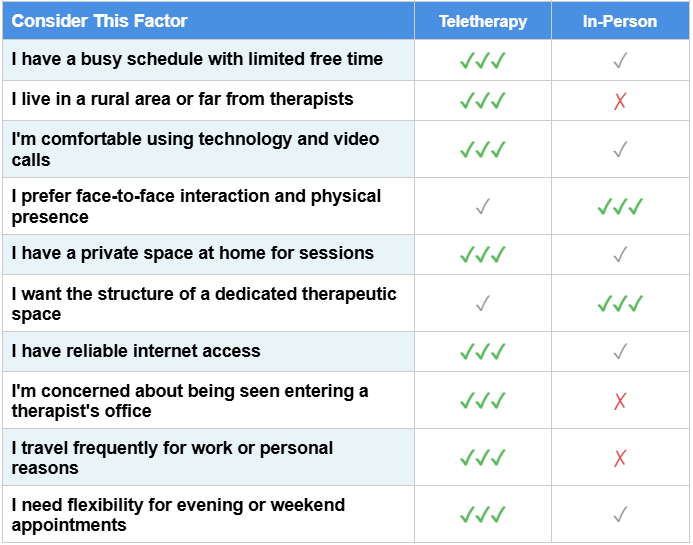
Teletherapy and in-person therapy offer effective pathways to mental health support, each with unique advantages. The best choice is the one that removes barriers to consistent attendance and feels comfortable for you. What matters most is taking the step to seek help and finding a qualified therapist who understands your needs.
Insight Therapy Solutions is a US-based teletherapy and mental health services provider offering online counseling for anxiety, depression, trauma, and relationship issues. Our licensed clinicians provide evidence-based care through secure, HIPAA-compliant video sessions, making quality mental health support accessible wherever you are. Whether you choose teletherapy or decide in-person therapy is right for you, taking care of your mental health is a courageous and important step.
Book a free matchmaking session today to connect with a therapist who’s the right fit for your unique needs and goals. We’ll help you find a clinician who specializes in your concerns and matches your preferences for communication style, approach, and availability. Quality mental health support is just a click away—wherever you are.

