
Considering online therapy but unsure how the process works? Many people wonder about the practical details—from scheduling that first session to understanding what happens during virtual appointments.
This guide explains how online therapy works step by step, from initial contact through ongoing care, helping you understand what to expect and whether teletherapy fits your needs.
What Is Online Therapy
Online therapy—also called teletherapy—connects you with a licensed therapist through secure video sessions instead of in-person office visits. You meet with your therapist from home or any private location using a HIPAA-compliant video platform designed to protect your privacy.
The process delivers the same clinical depth as traditional therapy. When provided by licensed professionals, online therapy offers identical structure and outcomes as face-to-face sessions. You work with a therapist who uses proven treatment methods tailored to your specific needs.
How Online Therapy Works: The Complete Process from Start to Finish
Understanding how online therapy works means knowing each phase of the therapeutic relationship. Most teletherapy practices follow a structured intake and matching process.
Step 1: Making Initial Contact
Getting started is direct. You share basic information about what brings you to therapy—anxiety, relationship stress, depression, burnout, or feeling directionless. This initial contact helps providers understand your situation broadly without requiring extensive detail upfront.
Step 2: Completing Your Clinical Intake Assessment
A licensed provider conducts a clinical intake assessment. This is a substantive conversation exploring your needs, goals, symptoms, and any factors that might influence your treatment. This assessment helps determine the appropriate level of care and treatment approach.
Step 3: Getting Matched with Your Therapist
This deliberate matching increases the likelihood of building a strong therapeutic relationship, which research identifies as one of the most significant factors in successful therapy outcomes.
Step 4: Scheduling Your First Virtual Session
Once matched, scheduling accommodates real schedules. You book your first virtual session at a time that fits your life, whether early morning, during lunch, or evenings. The flexibility of online therapy means you can maintain consistent care without commute time or rigid appointment windows.
What Happens During Online Therapy Sessions
Understanding how online therapy works includes knowing what occurs during the sessions themselves. An online therapy session mirrors in-person appointments in structure and depth, typically lasting 45–50 minutes through a secure video platform.
The Structure of a Typical Session
Your therapist guides the conversation while creating space to explore thoughts, emotions, patterns, and experiences. This isn’t unstructured venting—therapy is purposeful, directed work with specific goals.
Sessions include skill-building, reflection exercises, and practical strategies applicable between appointments. You might work on identifying triggers, developing coping mechanisms, improving communication patterns, or processing past experiences.
Evidence-Based Approaches Used in Online Sessions
Therapists typically use proven therapeutic methods that are equally effective in virtual settings:
Cognitive-Behavioral Therapy (CBT) for changing unhelpful thought patterns and behaviors. CBT helps you identify distortions in thinking and develop more balanced perspectives.
Dialectical Behavior Therapy (DBT) for emotional regulation and distress tolerance. DBT teaches specific skills for managing intense emotions and improving relationships.
Acceptance and Commitment Therapy (ACT) for psychological flexibility and values-based living. ACT focuses on accepting what’s outside your control while committing to actions aligned with your values.
Trauma-Informed Care for processing difficult experiences safely. This approach recognizes the impact of trauma and creates a secure environment for healing.
These are research-backed approaches used in virtual and in-person settings worldwide, not experimental methods.
Between Sessions: The Continuity of Care
How online therapy works extends beyond the 50-minute session. Many therapists assign homework, reflection exercises, or skill-practice between appointments. This continuity reinforces progress and helps integrate therapeutic insights into daily life.
For many mental health concerns, online sessions deliver the same interaction, focus, and clinical outcomes as traditional therapy.
How Security and Confidentiality Work in Online Therapy
Questions about online therapy legitimacy and safety are valid when considering how online therapy works from a privacy standpoint.
HIPAA-Compliant Technology
Reputable teletherapy platforms use HIPAA-compliant technology, meaning your personal health information is encrypted and protected by the same legal standards governing hospitals and medical offices. Your sessions are private, secure, and confidential.
The video platforms used are specifically designed for healthcare, with end-to-end encryption, secure data storage, and strict privacy protocols that exceed standard video conferencing tools.
Licensed Professional Standards
At Insight Therapy Solutions, you work with fully licensed mental health professionals authorized to practice in your state. Clinicians meeting rigorous professional and ethical standards.
All therapists maintain professional liability insurance, participate in continuing education, and adhere to ethical codes governing confidentiality, informed consent, and professional boundaries.
Research-Backed Clinical Outcomes
Extensive research demonstrates that teletherapy produces clinical results for anxiety, depression, stress-related concerns, relationship challenges, and more when delivered by trained professionals using evidence-based methods.
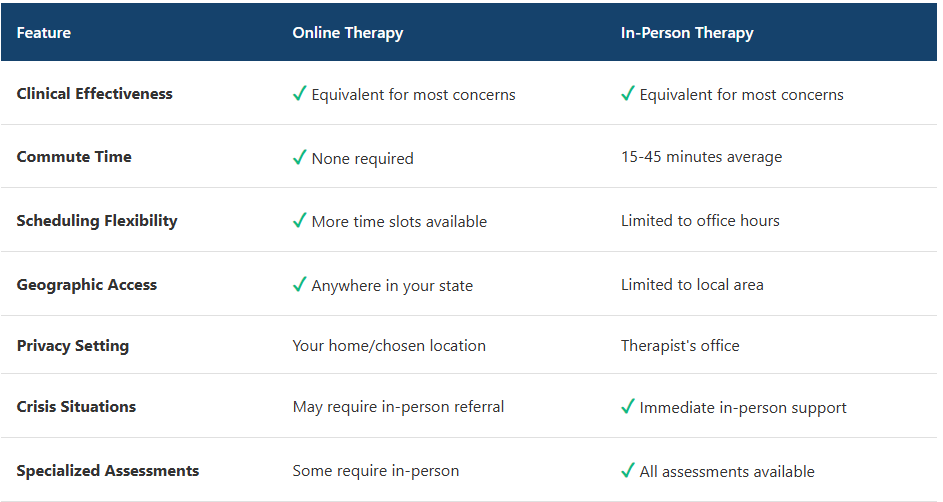
A 2022 meta-analysis found that online cognitive-behavioral therapy showed equivalent outcomes to in-person CBT for treating anxiety and depression. For many conditions, outcomes match in-person care.
Who Benefits Most From How Online Therapy Works
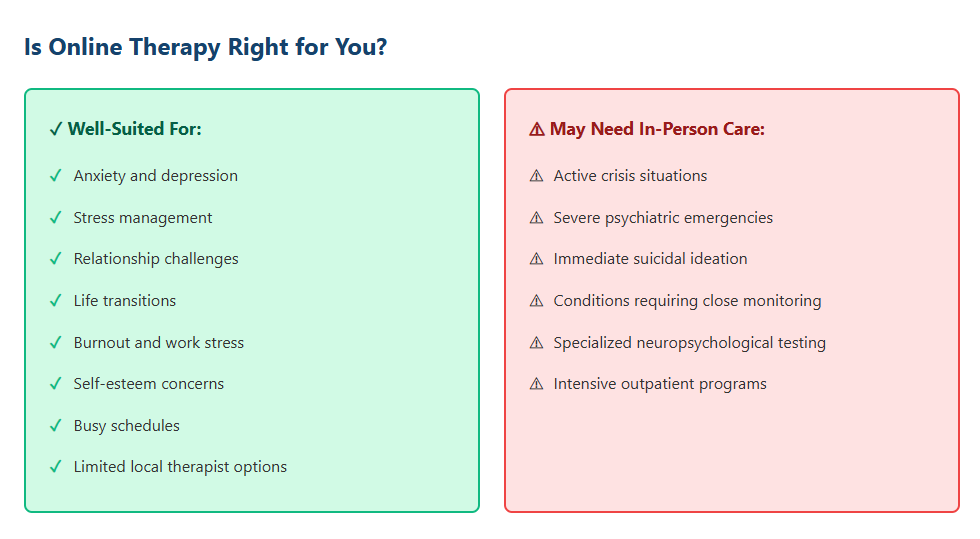
Understanding how online therapy works helps identify whether it matches your needs. Online therapy addresses a wide range of mental health concerns and produces particularly strong results for people experiencing:
- Anxiety disorders and chronic stress
- Depression and persistent low mood
- Burnout and emotional exhaustion
- Relationship challenges and communication difficulties
- Major life transitions (career changes, relocation, loss)
- Emotional regulation difficulties
- Identity exploration and self-esteem concerns
The way online therapy works inherently suits people who value consistency and convenience. Without commuting, sessions integrate more naturally into demanding schedules. If you relocate or travel within a state where your therapist is licensed, your care continues uninterrupted.
For many clients, this continuity proves essential. Working with the same therapist over time, without disruptions from logistics creates the stability required for substantial progress.
When Alternative Treatment Options May Be More Appropriate
Understanding how online therapy works also means recognizing its limitations. While online therapy produces strong results for many people, it doesn’t fit every situation.
Situations Requiring Higher-Level Care
Immediate crisis situations, active suicidal ideation, certain psychiatric emergencies, or conditions requiring intensive outpatient or inpatient treatment need in-person or hospital-based care.
Some psychological assessments (neuropsychological testing, certain diagnostic evaluations) or specialized interventions also require face-to-face services.
When In-Person Care Is Recommended
If you’re experiencing severe symptoms that require close monitoring, medication management with frequent check-ins, or conditions where physical presence provides additional therapeutic benefit, your provider will discuss these needs openly.
At Insight Therapy Solutions, therapists prioritize client safety and transparency. If online therapy isn’t appropriate for your situation, your provider will explain your options and help coordinate appropriate referrals. Acknowledging these limits is part of ethical, responsible care.
Different Models of Online Therapy Delivery
Understanding how online therapy works at different providers reveals significant variation in quality and approach.
Teletherapy-Only Practices
Some practices operate exclusively through teletherapy. Their entire clinical model is designed for virtual delivery rather than adapted from in-person formats. This specialization can mean more refined virtual care processes and therapists experienced specifically in teletherapy delivery.
Hybrid Practices
Other practices offer in-person and online options. This model provides flexibility to switch between formats if needed, though availability of online appointments may be more limited.
App-Based Platforms
Some platforms emphasize convenience and quick matching, often using messaging or brief video sessions. These may work for some people but generally provide less intensive clinical care than traditional teletherapy models.
Factors to Consider
When evaluating online therapy options, consider:
- Licensing: Ensure therapists are licensed in your state
- Matching process: How are you paired with a therapist?
- Session format: Live video, messaging, or phone?
- Insurance: Does the provider accept your insurance?
- Specializations: Does the therapist have experience with your concerns?
- Continuity: Can you see the same therapist consistently?
Taking Your First Step: How to Get Started
Now that you understand how online therapy works, you can evaluate whether it’s the right approach for your needs.
Most teletherapy providers offer initial consultations—often free—where you can ask questions about their process, meet potential therapists, and determine if the format feels comfortable for you.
Professional mental health support is more accessible than you might think. The question isn’t whether you need help, it’s whether you’re ready to take the first step.
Additional Resources
Getting Mental Health Support Virtually – Official NIMH guide explaining what virtual mental health care includes, how it works, the benefits and things to consider when looking for teletherapy or telehealth services. This is a great resource for understanding online therapy in a clinical context.
“Online therapy is here to stay” – An APA article discussing trends in online therapy and telepsychology, including benefits, challenges, and evolving practice standards. This helps explain teletherapy from the perspective of psychological professionals.
NAMI mental health support and education – While not exclusively about teletherapy, NAMI provides extensive support, education, and virtual groups that complement online therapy by offering peer support and community resources.

