
Someone asks how you’re doing. “I’m fine,” you say automatically, already moving to the next task, and maybe you believe it because after all, you’re getting things done, showing up, and managing everything on your plate. But what if “fine” is just the word you use when you’re too busy to notice you’re not okay? What if it’s the story that keeps you from having to stop, feel, and face what slowing down might reveal, one of the hallmark patterns of high-functioning burnout?
Why High-Functioning People Avoid Slowing Down
For many high-achieving and chronically busy individuals, “I’m fine” is a deeply ingrained script that emerges when you don’t have time for a more honest answer, when vulnerability feels dangerous, or when you’ve built an entire identity around being the person who handles things.
High-functioning burnout affects people who appear successful on the surface while experiencing profound internal exhaustion, and unlike traditional burnout where performance drops, high-functioning individuals maintain productivity, but at significant cost to their mental health and wellbeing.
Why Staying Busy Becomes Your Default Setting
When your sense of value is tied to output, slowing down feels like failure because you’ve internalized the belief that you’re only as good as your last accomplishment, your most recent contribution, or how much you can handle without breaking. Rest becomes something to earn rather than something you inherently deserve—one of the central distortions seen in high-functioning burnout.
Admitting you’re struggling—even to yourself—can feel like admitting defeat, especially if you’ve spent years being the capable one, the person others lean on, the one who “has it together.” Saying “I’m not fine” threatens the identity you’ve constructed and the role you play in others’ lives.
When you finally pause, all the emotions you’ve been outrunning catch up. The anxiety you’ve been managing through task completion surfaces alongside the grief you’ve postponed and the resentment you’ve suppressed. Even the existential questions you’ve avoided begin to emerge. Staying in motion keeps these feelings at bay, creating an illusion of control that fuels high-functioning burnout cycles.
After prolonged stress, your body learns to operate in a constant state of activation, and what starts as a response to external demands becomes your baseline. You become physiologically adapted to urgency, and calm starts to feel wrong—even dangerous—because your nervous system interprets rest as a threat when it’s no longer familiar, which is another defining feature of high-functioning burnout.
The Hidden Purpose of “I’m Fine”
“I’m fine” serves multiple psychological functions simultaneously by protecting you from having needs—when you’re fine, you don’t have to ask for help, admit limits, or risk disappointment when support doesn’t come.
The phrase maintains your role as the strong one, the reliable one, the one who doesn’t complain, keeping your relationships predictable and your value clear while avoiding uncomfortable conversations that bring questions you don’t have energy to receive. Perhaps most significantly, this simple statement prevents you from having to change.
The problem is that “fine” isn’t sustainable, and you can’t outrun exhaustion or high-functioning burnout forever.
Signs of High-Functioning Burnout
Here’s what makes this pattern so insidious: you really might feel fine most of the time because your body and mind have adapted so completely to stress that you’ve forgotten what true wellness feels like. You’re not thriving—you’re just highly functional in survival mode, which is the essence of high-functioning burnout.
Research shows that high-functioning burnout often goes unnoticed because individuals continue to meet responsibilities and maintain appearances while experiencing chronic stress, physical fatigue, and emotional exhaustion internally.

The Physical and Emotional Signals of High-Functioning Burnout
Your shoulders live somewhere near your ears and your jaw is clenched, but you only become aware when you get a massage or someone points it out. You might be getting seven or eight hours of sleep, but you wake up exhausted, or you struggle to fall asleep because your mind races the moment you’re still. Your body expresses what you’re not allowing yourself to feel through persistent headaches, ongoing digestive issues, and recurring chest tightness.
You snap at loved ones over minor inconveniences and feel irrationally angry at slow drivers, long lines, or simple mistakes—this disproportionate reactivity signals nervous system dysregulation, meaning your capacity to handle even small stressors is compromised. Your brain is already maxed out on decisions, a phenomenon known as decision fatigue, which makes choosing what to eat for dinner feel overwhelming and planning anything beyond tomorrow feel impossible.
You’re going through the motions but don’t feel particularly present, with joy feeling muted and sadness feeling distant as you operate on autopilot, dissociated from your actual emotional experience. There’s a low-level hum of worry that never quite leaves, and even when nothing is urgently wrong, you can’t shake the feeling that something bad is about to happen.
These internal experiences are exactly why high-functioning burnout can remain invisible—to you and to others.
The Behavioral Patterns That Give You Away
When you have downtime, you fill it immediately because you can’t sit still without your phone, and doing nothing makes you anxious rather than refreshed, which means you’ve lost the ability to simply be. You agree to things you don’t have capacity for, volunteer when you’re already stretched thin, and can’t tolerate disappointing others even at the cost of your own wellbeing.
Social events feel like obligations rather than pleasures, hobbies gather dust, and you cancel plans at the last minute because you’re too depleted to show up for connection or joy. You can’t watch TV without also scrolling your phone or folding laundry, vacations include a packed itinerary, and you measure rest by its utility rather than its restorative quality.
The Crucial Difference: Coping vs. Thriving
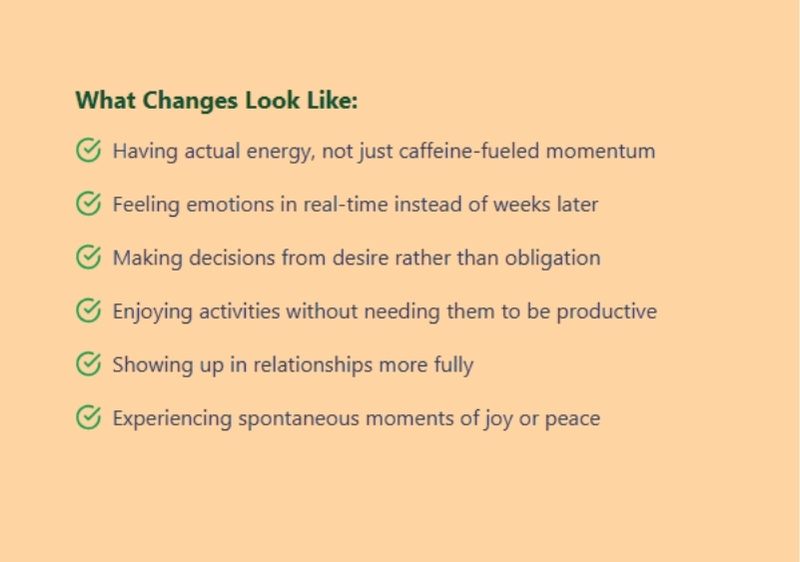
Coping looks like getting through the day while meeting basic obligations, maintaining appearances, and somehow functioning despite feeling terrible. Thriving looks entirely different—it means having energy left at the end of the day while feeling genuinely engaged with your life, experiencing authentic positive emotions, and maintaining capacity for spontaneity and joy.
If you’re consistently in the first category but telling yourself you’re “fine,” your definition of fine might need examination—and may point to high-functioning burnout.
How Therapy Supports Recovery
For people who have been running on empty for years, slowing down isn’t just difficult—it can feel genuinely unsafe, which is where therapy becomes essential. A skilled therapist doesn’t just tell you to rest more or stress less but helps you understand why slowing down feels dangerous and creates conditions where it becomes possible—critical work in recovering from high-functioning burnout.
Cognitive Behavioral Therapy (CBT) and other evidence-based approaches help high-functioning individuals recognize thought patterns that perpetuate burnout, while somatic techniques address the nervous system dysregulation that makes rest feel threatening.
Creating Emotional Safety First
The reason you can’t slow down isn’t usually lack of knowledge—you know you’re tired, you know you’re stretched thin, but knowing doesn’t make stopping feel any safer.
Therapy provides a container for what surfaces when you stop moving, with your therapist holding space for the emotions, memories, and fears that have been chasing you. With someone present and attuned, what felt unbearable becomes manageable, and you learn that feelings won’t destroy you—that you can feel difficult things and survive them, that feelings have a beginning, middle, and end.
Your therapist validates the real reasons you’re scared, whether rest was punished in your family, slowing down meant being left behind, or stillness once meant danger. Understanding the origin of your fear helps it make sense rather than feel like a personal failure.
Understanding What You’re Really Afraid Of
When therapists explore why someone can’t slow down, what emerges is rarely about laziness or lack of discipline, and the core fears usually reveal themselves in different ways. “If I stop, I’ll realize how bad things really are” reflects how staying busy keeps you from facing the fact that your relationship is failing, your job is miserable, or your life doesn’t match your values.
Or perhaps: “If I’m not productive, I’m worthless”—a belief that often has deep roots in family messages, cultural conditioning, or past trauma, and therapy helps you separate your inherent worth from your output.
Sometimes the fear centers on abandonment: “If I show I’m struggling, people will leave,” perhaps because you learned early that having needs pushed people away or that being “too much” meant abandonment. Therapy helps you test these beliefs in a relationship where your vulnerability is met with consistent presence.
And often there’s the overwhelming concern: “If I let myself feel, I won’t be able to function,” a fear that acknowledging pain will open floodgates you can’t close. Therapy teaches emotional regulation—how to feel without being overwhelmed, how to titrate intensity, and how to return to baseline.
Regulating Your Nervous System and Building Sustainable Change
For people living in chronic activation, insight alone isn’t enough—the body needs retraining through somatic techniques that teach you how to recognize early cues of overwhelm and how to gently shift your nervous system out of survival mode. You learn to create a sense of internal steadiness through practices that help you feel grounded and present instead of relying on constant motion to feel safe.
The therapeutic relationship itself becomes regulating as your therapist’s calm, consistent presence supports your system in learning what safety feels like without urgency. Over time, this co-regulation reshapes the patterns that maintain high-functioning burnout.
Therapy also helps you redefine your relationship with productivity by helping you understand that rest, play, and emotional processing are legitimate and necessary rather than simply replacing overwork with self-care tasks. Boundary-setting becomes less about disappointing others and more about protecting your capacity as you learn to pause before you break, to check in before you shut down, and to speak to yourself with compassion rather than criticism.
There is also space for grief—grief for the years spent hustling for worth, the experiences missed because you were too overwhelmed to feel them, and the parts of yourself that were sidelined in the name of being “fine.”
Why Insight Therapy Solutions is the right fit:
At Insight Therapy Solutions, we understand that “I’m fine” often becomes the story people tell when slowing down feels overwhelming, which is why our entire practice is built to support individuals who appear high-functioning on the outside but feel overstretched on the inside through accessible, compassionate, and truly personalized care.
Free 15–30 Minute Therapist Matchmaking SessionWe match you with a licensed therapist who understands patterns like over-functioning, emotional overload, and the fear of slowing down.
100% Teletherapy Across Multiple StatesAccess support from anywhere in Nevada, Florida, Virginia, Missouri, and more—no travel, no waiting rooms, no extra barriers when you’re already stretched thin.
Insurance-Friendly CareWe accept many insurance plans plus HSA/FSA and private pay options, making therapy more accessible when you need it most.
Flexible SchedulingEvening and weekend appointments help you get care without disrupting an already full life.
Compassionate, Highly Trained TherapistsOur team brings deep understanding to the challenges of chronic overwhelm, having been selected specifically for their ability to work with complex patterns of burnout while maintaining the warmth and cultural awareness that makes therapy feel truly supportive.
You don’t need to have all the answers before reaching out, and if “I’m fine” has become your default, we’re here to help you slow down safely and reconnect with yourself. You don’t have to wait for things to fall apart before reaching out, and therapy can give you a grounded space to understand what’s happening beneath the surface and to feel supported while you learn a new way forward.

Conclusion: You Deserve More Than “Fine”
You don’t have to wait until everything falls apart to ask for support because noticing your patterns is already a powerful first step. Slowing down is permission to reclaim the parts of you that have been running on autopilot, and if you’re ready to understand yourself more deeply and build a life where “fine” isn’t the ceiling, therapy can help you get there.
Book your 15-minute free Therapist Matchmaking Session today and let us help you find the right therapist who understands your needs.
Additional Resources
Mayo Clinic: Clear, medically reviewed guidance on how chronic stress affects your body and mind, helping you understand why “I’m fine” can mask emotional overload.
National Institute of Mental Health (NIMH): Evidence-based insights on stress, anxiety, and nervous-system responses that explain why high-functioning people struggle to slow down.
National Alliance on Mental Illness (NAMI): Practical education and support materials for recognizing when coping turns into overfunctioning and how to get appropriate help.
Psychology Today: A comprehensive directory of licensed therapists where you can explore therapeutic approaches for stress, burnout, and emotional overwhelm.

